Short answer: Choose the insert by the job it has to do, not by which material sounds more premium. Die-cut paperboard holds a light product in place and usually stays in the paper recycling stream with the box. EVA cuts to a close-fitting cavity and is the usual choice when bottles, jars or jewelry must not rattle. Foam is used when the main job is cushioning. Molded pulp is a formed fibre tray, often chosen for a fibre-only look at volume. Fabric-wrapped or flocked trays are chosen when the first touch has to feel like a jewelry or watch presentation. Send the real product (or exact dimensions and weight) with the RFQ; price is quoted by specification.
This guide is a buyer’s selection map — materials, a match to chocolate, cosmetics, wine and jewelry, and the questions to lock before sampling. It is not a price list.
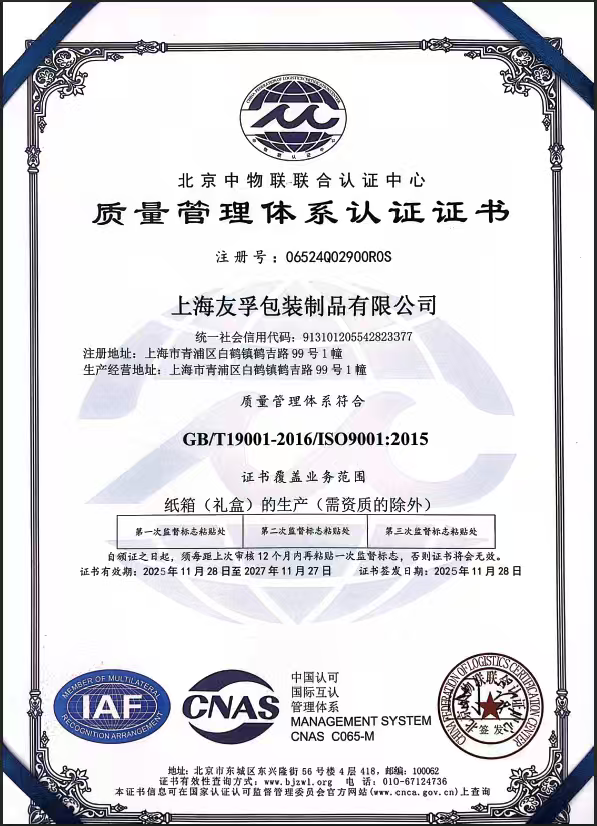
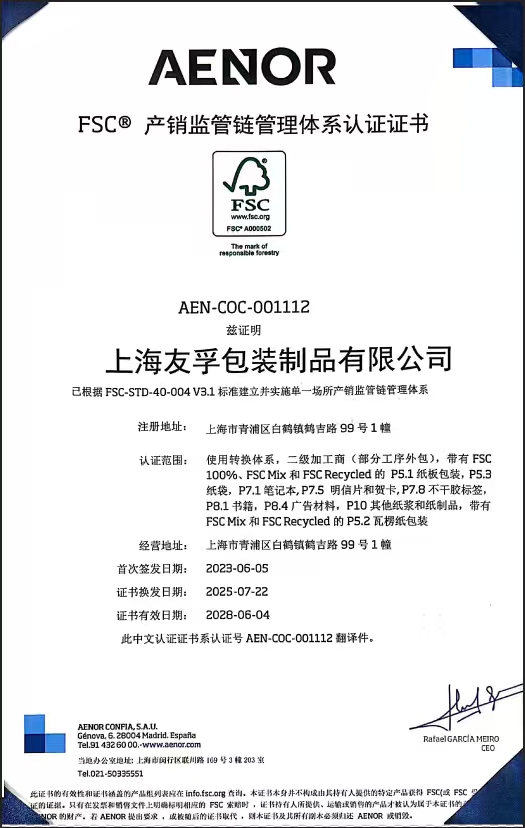
Shanghai Yoofo Packaging (Qingpu, Shanghai; company registered 2010; founder with 30 years in packaging; about 5,000 m²; 100+ staff) quotes rigid gift boxes with inserts as part of the same project. On a typical RFQ we price paperboard, EVA and flocked trays alongside the box. Other insert types can be specified and will be confirmed in the quotation if we can support them for that job. Certifications: ISO9001 and FSC only. Bulk MOQ 2,000 pieces per design. A pilot run is available only for buyers placing a bulk order of 2,000 pieces or more; the pilot fee is credited to that bulk order. Samples in 5 days; bulk about 20 days, FOB Shanghai. Peak capacity is up to 40,000 boxes/day.
Start with the job, then pick the material
Before naming a foam or a paper tray, write down the failure you want to avoid:
Rattle and scuff — the product wanders and rubs the wrap or another item.
Breakage or denting — glass, ceramic, or a heavy bottle that can shift in transit.
Presentation — the first thing the customer touches inside the lid.
End-of-life — whether the insert should leave the box in one paper stream, or whether a mixed-material tray is acceptable.
Packing at your line — how easily a person (or a line) seats the product without tearing the cavity.
The descriptions below are general industry practice. They are not a catalogue of stock thicknesses or a claim that every factory keeps every type on the shelf. Name the type you want on the RFQ and ask the factory to confirm what it will actually supply.
Die-cut cardboard / paperboard
A tray, collar or partition cut from paperboard or greyboard. It positions the product. Cushioning is limited: it stops items sliding into each other, but it is not a shock absorber for a drop.
Often the leanest insert for light kits and dry goods that already have a primary pack
Can be printed or wrapped to match the box
Usually the easiest option to keep in a paper-based recycling story, depending on coatings and glues
Weak choice as the only protection for glass or a heavy bottle
EVA
EVA (ethylene-vinyl acetate) is a dense, close-cell material that can be cut to a precise cavity. It grips the outline of a bottle, compact or jewelry piece and is widely used in cosmetics, spirits and electronics presentation packs.
Good when fit and a clean cavity edge matter
Often flocked (a velvet-like surface) when the tray will be seen
A mixed-material pack: do not describe it as “the same as a paper insert” for recycling or for an FSC claim
Specify cavity count and whether the product is meant to be lifted out easily or held firmly
Foam (including PU or PE foams)
“Foam” in packaging usually means a lighter cushioning foam rather than a crisp EVA presentation cavity. In general use it is chosen when shock absorption is the main job — an item that must survive handling, or a hidden layer under a paper board that the customer sees.
Useful under or around a visible paper tray when you want a paper look plus more cushioning
Surface and cell structure vary; some foams look unfinished if left exposed
Ask the factory which foam family they will quote, and whether it will be visible
Like EVA, it is not a paper-stream insert
Molded paper pulp
A fibre tray formed in a mold to the product’s shape (the family of trays used for many bottles, electronics and cosmetics in fibre-only programmes). In general industry practice, pulp is a volume decision: the mold is a project of its own, and it tends to make sense when the annual quantity can support that setup.
Fibre look; often chosen when the brief is “no plastic tray”
Good for repeating bottle or device shapes once the mold is right
Tooling time and cost are project-specific — do not assume a pulp tray can be sampled on the same path as a simple paper die-cut unless the factory says so
Confirm whether the pulp grade and any additives fit your recycling or FSC brief
Fabric-wrapped and flocked trays
A board or foam base covered with fabric, velvet, or a flocked surface. This is a presentation choice, common for jewelry, watches and high-touch gift sets.
The hand-feel is the point
Flocked EVA is a widely used middle path: a precise cavity with a soft surface, without a fully tailored fabric wrap
More handling in production than a plain paper partition
Say in the RFQ whether the customer will see the tray immediately on opening
Match the insert to the product
These matches are starting points, not rules. Always size the cavity from the real product, including caps, pumps, ribbons and any primary wrap that will be in the box.
Chocolate and other food gifts
For food gift boxes, a paperboard partition or tray is the usual first design: it separates pieces or inner packs and keeps a fibre-led story. Many chocolate and tea gift boxes use a rigid outer with a simple card tray.
Food-contact caution: unless you have a written specification for a food-contact insert, treat the gift box and the insert as outer packaging. Chocolate, biscuits and similar products should stay in their own food-safe primary wrap or liner. Do not assume a standard paper, EVA or foam tray is certified for direct food contact. If you need a documented food-contact material, state that as a requirement on the RFQ and supply the standard you must meet.
Cosmetics and skincare
For beauty boxes, the insert has to stop bottles and jars knocking each other and the lid. Light card kits (sachets, tubes already in cartons) can sit in a paperboard tray. Bottles, droppers and glass jars usually need a closer cavity — EVA or flocked EVA is the common industry choice — plus a board caliper that does not flex when the set is picked up.
Think about removal: a cavity that holds a pump bottle for transit can still be too tight for a customer to lift out cleanly. A sample with the real components settles this faster than a drawing.
Wine and spirits
For wine boxes, the insert has two jobs: support the body and protect the neck. EVA cavities, formed fibre, or a well-designed board cradle are all used in the trade. A partition that only looks neat on a table and does not support the bottle in transit is not finished work.
Say whether the pack is one bottle or two, the bottle weight, and whether it will travel as a gift box inside an outer carton. Heavy glass is a case where the insert decision matters as much as the box structure.
Jewelry and small valuables
Small items rattle in empty space. Flocked or fabric-covered trays with a tight nest — sometimes with a lid cushion — are the usual presentation. Paperboard can work for a light fashion piece in a tight collar; it is a weak choice for rings and chains that can scratch or tangle. A luxury rigid box with a poorly fitted tray will still feel cheap the moment it is shaken.
How to spec an insert on the RFQ
Copy this block into the same brief you use for the box (order steps; RFQ template when that page is live):
- Product: [type], weight, photos, and L × W × H of each item as it will sit in the box (include caps and primary wrap) - Cavity count and layout: [sketch or reference] - Insert type, if you already have a preference: paperboard / EVA / flocked / foam / pulp / fabric — or “please recommend” - Fit: snug / easy lift-out / extra transit cushioning - Will the customer see the insert immediately? Yes / no - End-of-life or FSC notes, if any (paper-only tray vs mixed materials) - Quantity and destination
Then:
Send one physical product for a fitted sample when the shape is irregular. Drawings miss pumps, feet and tolerances.
Approve the insert with the box, not as an afterthought. A late change of cavity often means a new die and a new sample clock.
Plan a packed check for glass and heavy sets — the empty box can look perfect and still fail in the outer carton.
Standard Yoofo timing still applies to the project: 5-day sampling after structure and files are locked, bulk about 20 days after approval, FOB Shanghai. If a chosen insert needs a longer path (for example a new pulp mold), that should be written in the quotation.
FAQ
What insert should I choose for a rigid gift box?
Choose by job. Use paperboard to hold light products in place; EVA or flocked EVA for a close-fitting visible cavity; foam when cushioning is the main need; molded pulp for a formed fibre tray at a volume that supports a mold; fabric-wrapped or flocked trays when the first touch has to feel like jewelry presentation. Confirm the type on the RFQ and fit it to the real product.
What insert types does Yoofo quote?
Paperboard, EVA and flocked trays are routinely quoted with the box. If you need foam, molded pulp or a fabric-wrapped tray, specify it on the RFQ and we will confirm whether we can support that construction for your project. Price is quoted by specification.
Is a paper insert enough for glass bottles?
Often not, if the bottle can move or the pack will take a knock. Paperboard can separate items, but it offers limited cushioning. For wine, spirits and glass jars, start with a close-fitting cavity (commonly EVA, or another agreed cradle) and test the packed gift box in its outer carton.
Can the insert be included in an FSC claim?
Only when that component is specified, sourced and documented as eligible FSC material under the factory's Chain of Custody. A paperboard tray may be includable if it is set up that way; EVA, foam and fabric are different materials and should not be assumed to sit inside the claim. Ask for this in the RFQ.
Are gift box inserts food-safe for chocolate?
Not by default. Treat the box and insert as outer packaging unless you have a written food-contact specification. Keep chocolate and similar foods in their own primary wrap, and state any required food-contact standard on the RFQ.
Does an insert change the minimum order?
At Yoofo the bulk minimum remains 2,000 pieces per design, with or without an insert. A pilot run is available only for buyers placing a bulk order of 2,000 pieces or more; the pilot fee is credited to that bulk order.